
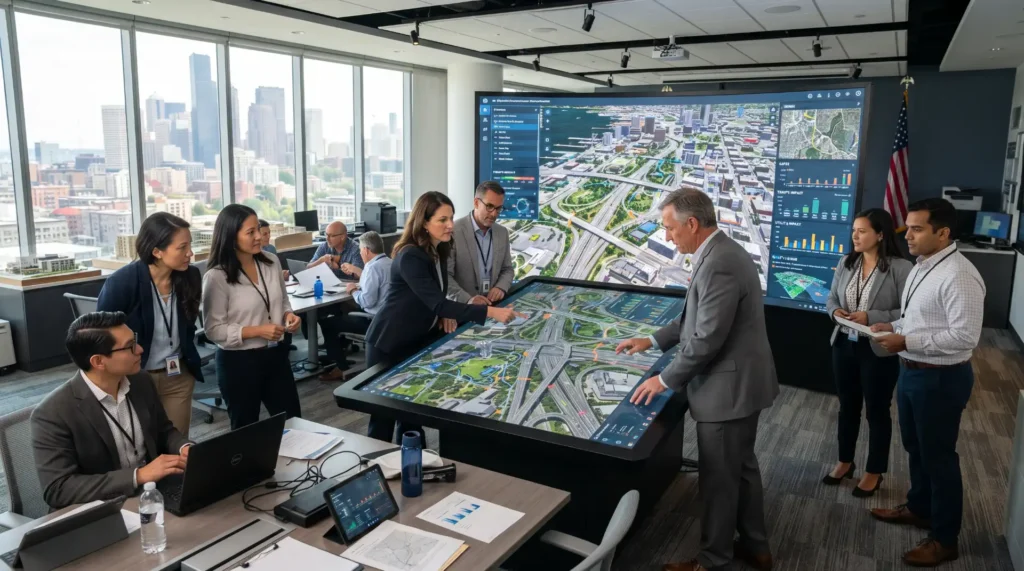
Public agencies across the United States are increasingly looking beyond traditional infrastructure planning tools. Digital twins are emerging as one technology that may change how governments plan, purchase, build, monitor, and maintain public assets.
A digital twin is more than a three-dimensional model. It is a digital representation of a physical asset or system that can incorporate information from sensors, geographic information systems, building models, maintenance records, and other operational data. When properly designed, the digital representation can change as conditions in the physical world change.
For public procurement professionals, this development creates a new category of purchasing decisions. Agencies may no longer be buying only construction services, engineering work, software, or sensors. They may be procuring interconnected systems that remain part of an infrastructure asset throughout much of its lifecycle.
The Federal Geographic Data Committee identifies digital twins as an important future use of the National Spatial Data Infrastructure. Its 2025 to 2035 strategic planning describes digital twins for buildings, bridges, roads, utility networks, rivers, forests, and other physical environments. The agency also highlights their potential for real-time monitoring and predictive maintenance.
That shift has major implications for government purchasing.
What Is a Digital Twin?
A digital twin is an electronic representation of a physical object, process, environment, or system.
For infrastructure, that could mean a digital version of a bridge, roadway, public building, water network, transit system, airport, electrical grid, or even an entire city district.
Traditional engineering models often represent an asset at one point in time. A digital twin can go further by receiving updated information from the physical asset.
A bridge digital twin, for example, might combine engineering drawings with structural sensor readings, maintenance inspections, traffic data, weather information, and repair records.
A transportation agency could then use that environment to understand current conditions and examine how different maintenance or operational decisions might affect the asset.
The National Institute of Standards and Technology describes digital twins as electronic representations of real-world entities that can show their states and changes over time. NIST also notes that digital twin systems combine existing technologies and introduce important interoperability, cybersecurity, and trust considerations.
That distinction matters for procurement because public agencies may need to purchase several interconnected components rather than one standalone product.
Why Digital Twins Matter for Public Infrastructure
Government infrastructure is expensive to build and often remains in service for decades.
Roads, bridges, public buildings, wastewater systems, rail networks, airports, utility systems, and other assets require planning, inspections, maintenance, upgrades, and eventual replacement.
Historically, information about these assets may have been spread across separate systems.
Engineering teams might maintain drawings. Maintenance departments may keep inspection reports. Geographic information could sit in GIS databases. Contractors may hold construction records. Sensors could produce another stream of information.
Digital twins create the possibility of bringing portions of that information together.
The result can give infrastructure managers a more complete view of an asset throughout its operating life.
For procurement teams, this means technology decisions made during an initial project may affect maintenance and purchasing decisions many years later.
Digital Twins Are Expanding the Scope of Infrastructure Procurement
Traditional infrastructure procurement commonly focuses on clearly defined deliverables.
An agency might purchase engineering services, construction materials, design work, inspection services, or maintenance contracts.
A digital twin can connect many of these areas.
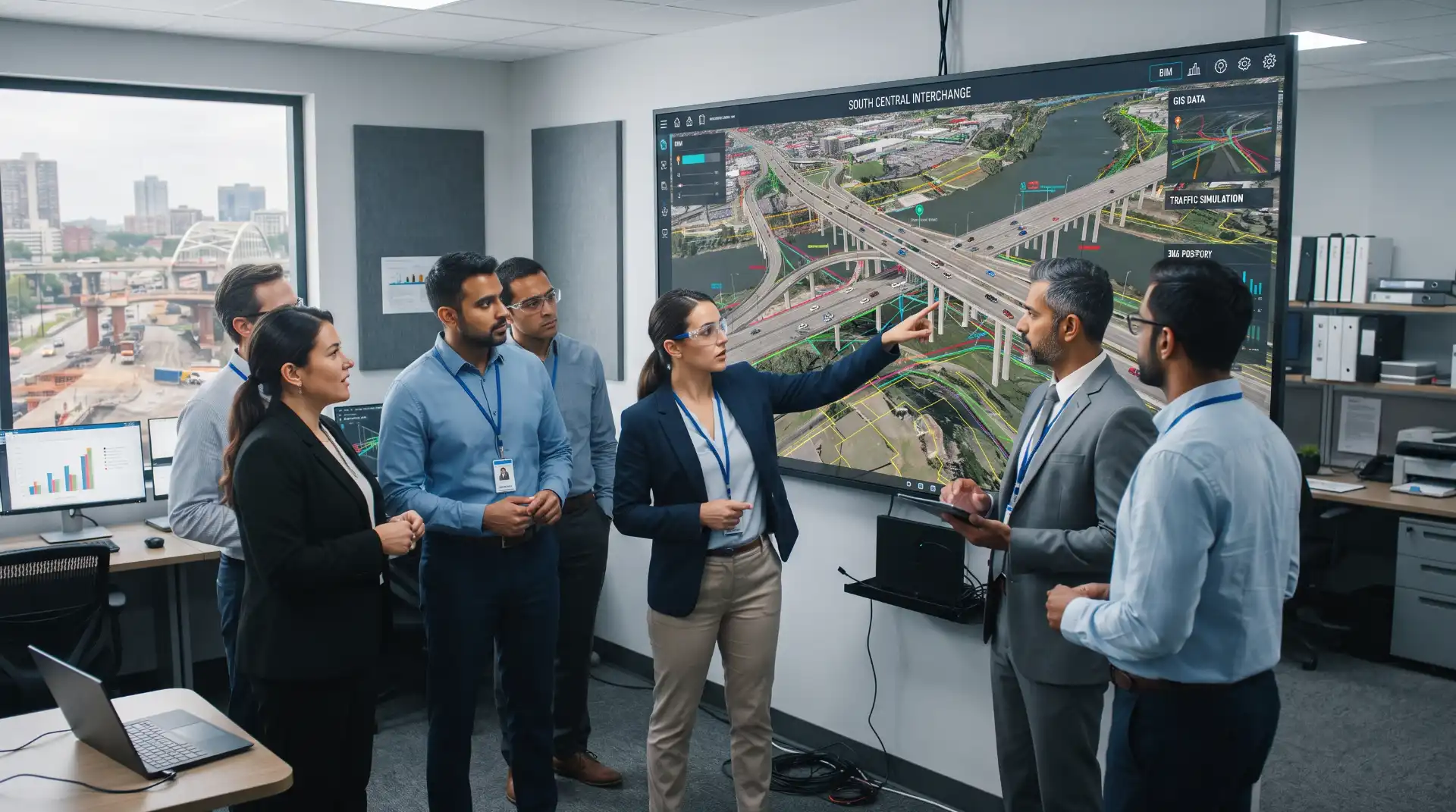
An agency developing a digital twin for a public building might need BIM software, sensors, cloud services, cybersecurity tools, data integration, GIS services, engineering expertise, equipment installation, analytics software, and ongoing technical support.
Each component may come from a different supplier.
Public procurement teams therefore have to think about the complete system rather than evaluate every purchase in isolation.
A low-cost sensor may not create good value if it cannot communicate with the agency’s chosen platform. A sophisticated modeling system may provide limited practical benefit if an agency cannot easily move its data into another environment.
Interoperability becomes part of the procurement discussion.
Procurement May Begin Earlier in the Infrastructure Lifecycle
Digital twins can also shift when procurement professionals become involved.
Technology requirements that affect the long-term operation of an asset may need to be considered during initial planning and design.
Suppose a transportation agency plans to construct a new bridge.
If the agency expects to maintain a digital twin during the bridge’s operating life, procurement documents may need to address data formats, structural sensors, digital modeling standards, software access, inspection records, cybersecurity, and future system integration.
Those decisions can affect design and construction contracts from the beginning.
Waiting until the project is completed may create additional costs if important data was never collected or delivered in a usable format.
This means procurement professionals, engineers, IT departments, GIS specialists, cybersecurity teams, and asset managers may need to coordinate earlier.
MAPPI has previously discussed the broader role of technology in transforming public purchasing. Digital twins represent another stage of that transformation because technology can become part of the infrastructure itself rather than simply supporting the procurement process.

Better Asset Information Can Improve Purchasing Decisions
One of the strongest potential benefits of digital twins is improved asset information.
Public agencies regularly make decisions about maintenance, repairs, replacement, and capital improvement projects.
Those decisions become more difficult when information is incomplete or outdated.
A digital twin can combine information from multiple sources and present a more current picture.
For example, a public works department could combine road condition information, traffic patterns, drainage data, previous repair work, and sensor information.
Procurement staff could then have stronger data when supporting upcoming maintenance contracts or capital purchases.
This does not mean a digital twin makes the decision.
Instead, it can provide information that engineers, procurement professionals, financial teams, and agency leaders can evaluate together.
Predictive Maintenance Could Change Procurement Timing
Many infrastructure purchases are reactive.
An asset fails, deteriorates, or reaches a scheduled inspection point. The agency then purchases the materials or services required to address the issue.
Digital twins may support a more predictive approach.
Sensor information and historical maintenance data can help infrastructure managers identify changes in asset performance before a major failure occurs.
For example, data from a bridge might indicate increasing vibration or structural movement. A water network could reveal abnormal pressure patterns. A public building could show changes in energy consumption or equipment performance.
The agency might then plan inspections or maintenance earlier.
For procurement teams, better forecasting can provide more time for competitive purchasing.
Emergency procurement often gives agencies less time to compare vendors, negotiate terms, or coordinate deliveries. Improved asset monitoring cannot eliminate infrastructure failures, but it may help identify some maintenance needs earlier.
That creates a natural connection with MAPPI’s existing discussion of emergency procurement during natural disasters and other urgent situations.
Digital Twins Can Change Construction Procurement
Construction projects generate enormous amounts of information.
Plans change. Materials are substituted. Contractors submit documents. Inspectors record progress. Equipment is installed. Maintenance instructions are provided.
Digital twins create an opportunity to preserve and organize more of this information after construction.
Instead of handing an agency a collection of static documents when a project closes, contractors may be required to provide structured digital information that becomes part of the operational twin.
This changes how agencies can write specifications.
Procurement documents may need to identify required file formats, data standards, naming conventions, model detail, update responsibilities, and ownership rights.
Without these requirements, agencies could receive digital files that are technically complete but difficult to use with their existing systems.
Interoperability Should Be a Major Procurement Consideration
One of the biggest risks in digital twin procurement is vendor lock-in.
A public agency may invest heavily in a digital twin platform and later discover that moving its information to another provider is expensive or technically difficult.
This problem becomes more serious when a system stores years of infrastructure data.
Agencies can therefore evaluate interoperability during procurement.
Questions may include whether data can be exported in widely supported formats, whether third-party applications can connect through documented interfaces, and whether the system works with existing GIS or BIM platforms.
The Federal Geographic Data Committee’s current NSDI strategy emphasizes interoperable geospatial data, applications, and services across federal, state, Tribal, local, and private-sector environments.
That broader national direction is particularly relevant to infrastructure systems that may exchange information between multiple agencies.
Data Ownership Needs Clear Contract Language
Public agencies should also examine who owns the information stored within a digital twin.
Some projects may contain data generated by government employees. Other information could come from contractors, consultants, sensors, software platforms, or third-party datasets.
Contract terms can clarify ownership and usage rights.
An agency may need continuing access to its information even after a software contract ends.
This can include engineering models, maintenance records, operational data, sensor history, images, geographic information, and system configurations.
If ownership and portability are not addressed early, changing vendors can become more difficult.
Public procurement teams can therefore treat data rights as part of the overall value of a digital twin contract.
Cybersecurity Becomes an Infrastructure Issue
Connected infrastructure introduces cybersecurity considerations.
A digital twin may receive information from sensors or operational systems. Depending on the application, it may also connect to systems that influence physical infrastructure.
That makes cybersecurity more than an IT issue.
NIST’s digital twin guidance specifically discusses traditional and emerging cybersecurity risks associated with these systems. It also emphasizes security and trust across digital twin technologies.
Procurement professionals may need to work closely with cybersecurity teams when evaluating vendors.
Important contract areas can include authentication, access control, encryption, vulnerability management, software updates, logging, incident response, subcontractor access, and data storage.
The specific requirements depend heavily on the infrastructure involved.
A visualization used for planning may carry different risks from a system connected to operational equipment.
Public Agencies Should Consider the Entire Technology Stack
Digital twin procurement can involve many technology layers.
The visible 3D model may be only one component.
Behind it could be cloud infrastructure, data storage, GIS databases, sensor networks, APIs, analytics tools, BIM software, cybersecurity controls, and mobile applications.
Agencies should understand which supplier is responsible for each layer.
A vendor may provide the primary digital twin platform while depending on several other companies for hosting, mapping, sensors, or analytics.
Procurement teams may therefore need to examine subcontractors and third-party dependencies.
This approach can help agencies understand where costs, responsibilities, and risks are located.
Digital Twins Can Support Infrastructure Planning
The technology can also be useful before construction begins.
Agencies can use digital environments to examine proposed projects and test alternatives.
Transportation planners might evaluate changes to traffic flows. A city could compare potential utility layouts. Building managers could examine energy use under different configurations.
These simulations cannot perfectly predict real-world outcomes, but they can add another layer of information to planning.
Procurement professionals may therefore see digital twin services included in engineering, architecture, transportation planning, or smart-city contracts.
The purchasing question becomes less about whether an agency needs “digital twin software” and more about whether digital twin capabilities improve a specific infrastructure project.
GIS and Digital Twins Are Closely Connected
Geographic information systems are particularly important to infrastructure digital twins.
Infrastructure exists in physical locations.
Roads connect to bridges. Water lines run beneath streets. Utility assets cross property boundaries. Public buildings exist within transportation and emergency-service networks.
GIS provides much of the location-based context needed to connect these systems.
The Federal Geographic Data Committee’s NSDI 2035 strategy describes a future national ecosystem built around trusted geospatial data and identifies digital twins, infrastructure management, smart cities, supply-chain optimization, and autonomous transportation among its use cases.
This also creates a natural internal-link opportunity to MAPPI content discussing satellite imagery and GIS applications.
Agencies Need to Evaluate Vendors Differently
Digital twin vendors can vary significantly.
Some focus on construction. Others specialize in city planning, utilities, manufacturing, transportation, GIS, building operations, or asset management.
A public agency should therefore evaluate whether a provider has experience relevant to the infrastructure being managed.
A visually impressive demonstration does not necessarily show whether a platform fits an agency’s operational needs.
Procurement evaluations may examine system compatibility, scalability, cybersecurity, training requirements, technical support, data portability, implementation schedules, and long-term costs.
Agencies may also examine whether a proposed system can work with technology already in place.
Replacing existing infrastructure systems simply to accommodate a new digital twin platform may substantially increase project costs.
Procurement Should Account for Lifecycle Costs
Digital twin pricing can extend beyond an initial software purchase.
Agencies may face recurring costs for cloud hosting, data storage, licensing, sensors, connectivity, technical support, integrations, software upgrades, cybersecurity, and staff training.
Sensor replacement can become another expense.
If an agency increases the amount of information collected over time, cloud and storage costs may also rise.
Procurement teams should therefore look at total lifecycle costs rather than focus only on the initial contract price.
This principle is consistent with broader public procurement practices where long-term value can matter more than a single purchase price.
Staff Training Is Part of the Investment
A digital twin provides limited value if employees cannot use it effectively.
Agencies may need training for engineers, facility managers, GIS professionals, planners, procurement staff, IT teams, and other personnel.
Training requirements should be considered during procurement.
Some platforms require specialized technical skills. Others offer easier interfaces intended for nontechnical users.
Public agencies can examine who needs access and what level of knowledge each group requires.
Procurement contracts may include initial implementation training along with continuing education as software features change.
Smaller Agencies May Use Different Approaches
Digital twins are not limited to large federal departments or major metropolitan governments.
Smaller cities, counties, utilities, school systems, transit authorities, and public institutions may also find practical applications.
The scale may simply be different.
A small community might create a digital representation of one public building, a water treatment facility, or a limited road network rather than attempt to model an entire city.
Cloud-based software and shared services may reduce some technical barriers.
However, smaller agencies can also face limited staffing and technology budgets.
Procurement decisions should therefore focus on realistic use cases rather than adopting technology because it is receiving attention.
Standards Could Become Increasingly Important
Digital twins depend heavily on information moving between systems.
Standards can help different technologies exchange that information.
Public procurement has an important role here because agencies can specify interoperability and data requirements when contracts are created.
If each project uses a proprietary structure, agencies may end up with disconnected digital twins that cannot communicate with each other.
Common standards can support broader infrastructure coordination.
This becomes particularly valuable when multiple government entities manage interconnected transportation, water, emergency, energy, or public-building systems.

Artificial Intelligence May Expand Digital Twin Capabilities
Digital twins and artificial intelligence are also beginning to overlap.
AI can analyze large streams of infrastructure data and identify patterns that may be difficult to detect manually.
For example, AI could analyze maintenance records, sensor information, weather data, and historical failures.
The resulting analysis might help infrastructure teams identify assets that need closer examination.
This makes AI governance relevant to digital twin procurement.
MAPPI’s existing content on responsible AI purchasing provides a useful related resource for procurement professionals evaluating systems that combine digital twins with machine learning or generative AI.
Public agencies still need human oversight, particularly when technology informs decisions affecting safety, spending, or public services.
Procurement Teams Should Start With the Problem
Digital twins can sound impressive, but technology should not become the procurement objective by itself.
An agency should first identify the problem it wants to address.
Does it need better bridge inspections?
Is a public building generating excessive maintenance costs?
Does a transportation department lack reliable asset information?
Is utility data spread across disconnected systems?
Once the problem is clearly defined, procurement professionals can evaluate whether a digital twin offers a practical response.
This approach can also help agencies avoid purchasing complicated platforms with features they rarely use.
Pilot Projects Can Reduce Procurement Risk
A limited pilot may provide useful information before an agency commits to a large digital twin program.
For example, a transportation agency could test the technology on one bridge or roadway segment.
A facilities department might begin with one municipal building.
The pilot can reveal integration problems, training needs, data-quality issues, and operating costs.
Procurement teams can then use those findings when developing requirements for a larger solicitation.
Pilot projects can also help agencies distinguish between technology that performs well during a sales demonstration and technology that works effectively in everyday public-sector operations.
Digital Twins Are Changing the Meaning of Infrastructure Procurement
Public infrastructure purchasing has traditionally centered on physical assets.
Digital twins blur the line between physical and digital infrastructure.
A bridge may now include not only steel and concrete but also sensors, data platforms, digital models, cybersecurity controls, and software services.
A public building may be accompanied by a continuously updated digital representation used throughout its operating life.
As these technologies expand, procurement professionals may play a larger role in decisions involving engineering data, interoperability, cybersecurity, software licensing, and long-term technology governance.
This makes digital twin procurement a multidisciplinary activity.
Engineering, procurement, IT, GIS, finance, legal, cybersecurity, and operations teams may all need to contribute.
Preparing for the Next Generation of Public Infrastructure
Digital twins are unlikely to replace traditional engineering, inspection, procurement, or asset-management practices. They may instead connect those activities more closely.
For public agencies, the greatest value may come from having better information across an asset’s lifecycle.
Procurement professionals can contribute by asking practical questions before technology is purchased.
Can agency data move to another system? Who owns the information? What happens when a contract ends? Which standards does the platform support? How much does the system cost over several years? What cybersecurity protections are included? Can existing government systems connect to it?
These questions can shape whether a digital twin becomes a useful infrastructure management tool or an expensive standalone technology.
Federal geospatial planning already recognizes digital twins as an important application for buildings, roads, bridges, utility networks, and other parts of the built environment.
As public infrastructure becomes more connected and data-driven, procurement practices may need to evolve alongside it.
For public agencies, the goal is not simply to purchase more technology. It is to procure systems that remain useful, interoperable, manageable, secure, and aligned with the long-term needs of the communities they serve.