
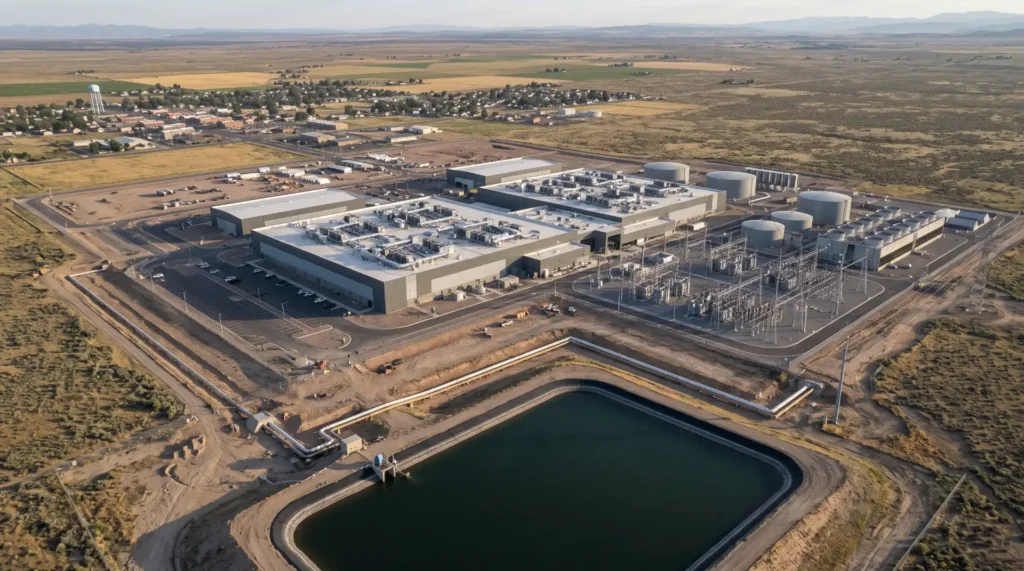
Why Data Center Water Consumption Is Becoming a Public Procurement Issue
The rapid expansion of data centers across the United States is creating new opportunities for economic development, technological innovation, and digital infrastructure investment. Large facilities support cloud computing, artificial intelligence, online services, financial transactions, government technology systems, and countless other digital operations that have become essential to modern American life. As demand for computing capacity increases, technology companies are investing billions of dollars in new data center campuses, often seeking locations with reliable electricity, available land, favorable tax policies, and access to substantial water supplies.
However, the growing demand for data center infrastructure is introducing a resource challenge that many local governments did not historically consider central to technology procurement and economic development planning: water consumption.
Data centers require reliable cooling systems to prevent servers, processors, storage equipment, and networking hardware from overheating. Depending on their design, these cooling systems may consume substantial quantities of water every day. A facility that appears to be primarily an electricity and technology project can therefore become one of the largest industrial water customers in a municipal service area.
For communities considering new data center developments, this creates important questions about water availability, infrastructure capacity, operating expenses, environmental protection, and long-term contractual obligations. It also creates a new responsibility for public purchasing professionals, municipal administrators, utility managers, and elected officials.
The issue is particularly important because water infrastructure decisions can affect a community for decades. A municipality may approve a development agreement, negotiate utility services, extend water pipelines, expand treatment capacity, or provide other public infrastructure support long before a data center reaches full operating capacity. If the original projections underestimate future water demand, taxpayers and existing utility customers could eventually face additional costs.
Public procurement provides an opportunity to address these concerns before construction begins. By establishing transparent requirements, conducting independent assessments, negotiating enforceable performance standards, and evaluating the full lifecycle cost of infrastructure, public agencies can make more informed decisions about large technology developments.
Data center water consumption should therefore be treated as more than an environmental consideration. It is also a procurement, infrastructure planning, financial management, and public accountability issue.
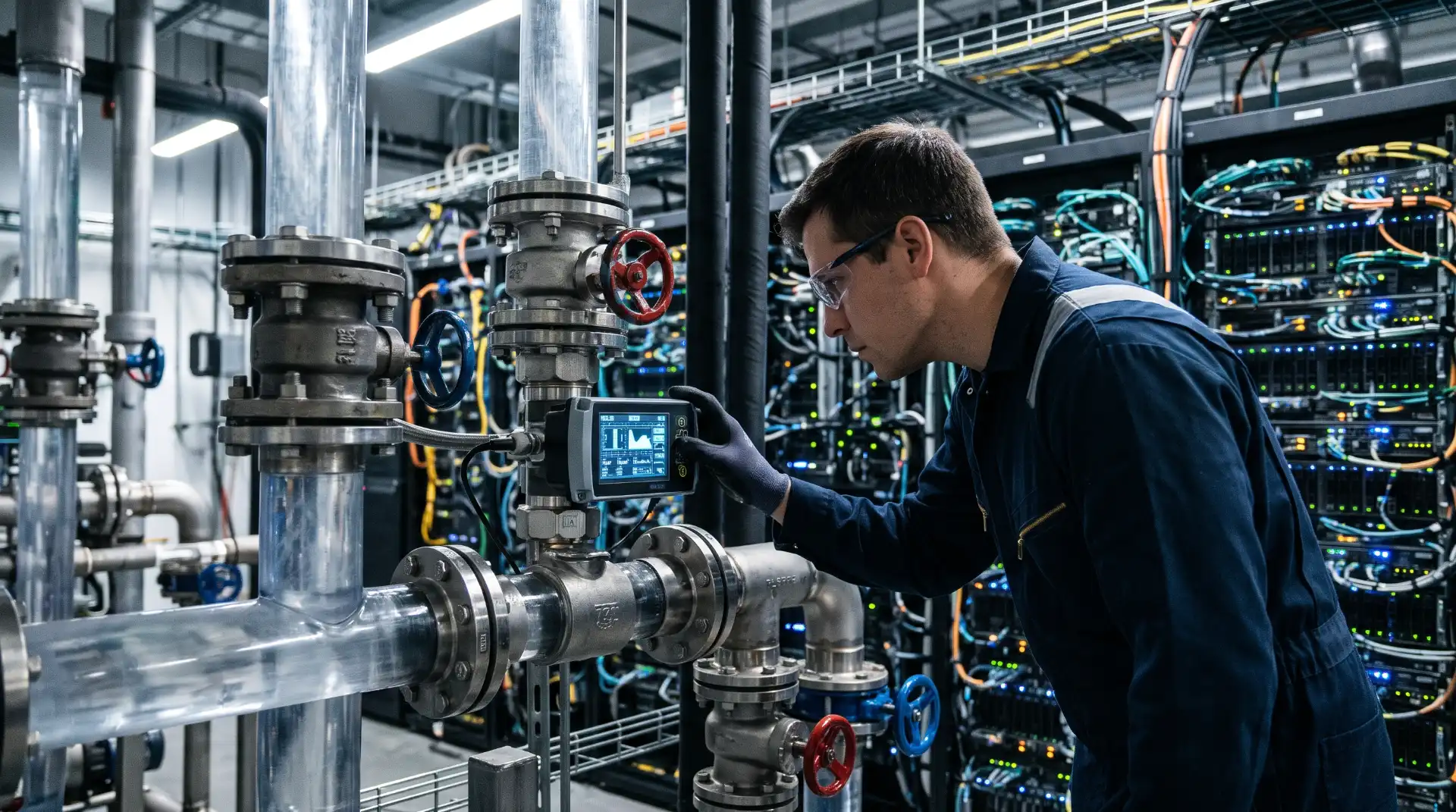 Understanding Why Modern Data Centers Consume Water The Relationship Between Computing Power and Cooling Demand
A data center houses thousands or even hundreds of thousands of computing components that operate continuously. Servers process information, artificial intelligence systems perform complex calculations, and storage equipment manages enormous quantities of digital information.
Almost all electricity consumed by computing equipment eventually becomes heat. If that heat is not removed effectively, equipment can experience reduced performance, unexpected shutdowns, accelerated component degradation, or permanent damage.
Cooling systems are therefore essential to maintaining reliable operations.
Traditional facilities may use computer room air-conditioning systems, chilled water loops, ventilation equipment, and cooling towers. Newer facilities increasingly incorporate liquid cooling technologies designed to manage the higher heat output associated with advanced processors and artificial intelligence hardware.
Water becomes particularly important when cooling systems
rely on evaporation. In evaporative cooling systems, water absorbs heat and evaporates into the atmosphere, helping lower temperatures. Additional water must continually enter the system to replace the amount lost through evaporation and other processes.
Cooling towers may also discharge water through a process called blowdown. As water evaporates, dissolved minerals and other substances become more concentrated. A portion of the circulating water must periodically be removed to prevent mineral buildup, corrosion, and operational problems.
The resulting water requirements depend on facility size, equipment density, cooling technology, weather conditions, water quality, and operational schedules.
This means two data centers with similar computing capacity may have substantially different water requirements.
How Large Can Data Center Water Demand Become?
The scale of potential consumption is one reason public agencies are paying greater attention to the issue.
A July 2026 Congressional Research Service report explains that an illustrative 100-megawatt U.S. data center could directly consume approximately 530,000 gallons of water per day when averaged across different cooling approaches, although actual requirements vary significantly. The report also discusses the dependence of many facilities on municipal water systems.
Every CRS Report
For a local government, that level of demand deserves careful examination.
A municipality that normally supplies residential customers, schools, hospitals, commercial properties, and public facilities may suddenly face a proposed industrial customer with a substantial and continuous water requirement.
The concern is not necessarily that every data center will create a shortage. Many communities have adequate water resources, and some facilities use technologies that significantly reduce freshwater consumption. The problem is that water availability is highly location-specific.
A development that is manageable in a region with abundant water and sufficient treatment capacity may create serious challenges in a drought-prone community with limited groundwater supplies.
Public officials must therefore evaluate actual local conditions rather than relying on national averages or general claims about technology efficiency.
The Different Cooling Technologies and Their Procurement Implications
Not all data centers use water in the same way. Understanding the differences between cooling systems helps procurement professionals evaluate vendor proposals more accurately.
Evaporative Cooling Systems
Evaporative cooling is widely used because it can remove heat efficiently while reducing certain electricity requirements.
The process uses water evaporation to transfer heat away from equipment or cooling systems. Although this approach can provide operational advantages, it creates a continuing demand for replacement water.
For communities, the primary concern is that water consumption may increase during hot weather, precisely when residential demand and irrigation requirements can also be elevated.
A procurement evaluation should therefore examine average annual consumption as well as peak summer requirements.
Developers should explain how much water their proposed system will require during normal conditions, extreme temperatures, maintenance activities, and periods of unusually high computing demand.
Air-Cooled Systems
Air-cooled systems use fans, heat exchangers, and other equipment to remove heat without relying on large volumes of evaporated water.
These systems may be attractive in regions where water availability is limited.
However, lower water consumption does not automatically mean lower overall resource consumption. Air-cooled equipment can require additional electricity, depending on climate, equipment configuration, and operating conditions.
For public agencies, this creates a procurement challenge involving competing performance objectives.
A municipality should not automatically select a system based on its lowest projected water consumption without examining electricity demand, operating costs, equipment reliability, and long-term maintenance requirements.
The appropriate approach is to compare total resource consumption and lifecycle expenses.
Closed-Loop Liquid Cooling
Closed-loop liquid cooling systems circulate coolant through sealed or substantially contained systems to transfer heat away from computing equipment.
Unlike systems that continuously evaporate large quantities of water, closed-loop configurations can reduce ongoing water requirements because the cooling fluid is repeatedly circulated.
However, the actual water footprint depends on how heat is ultimately rejected from the facility. A closed-loop internal system may still connect to cooling equipment that uses evaporative processes.
Procurement documents should therefore require vendors to describe the entire cooling process, not merely identify one component as closed-loop.
Officials should request information about initial system filling, routine replacement, evaporation, maintenance losses, discharge volumes, and emergency operating procedures.
Immersion Cooling and Emerging Technologies
Immersion cooling places computing components in specially designed dielectric fluids that transfer heat away from electronic equipment.
This technology may reduce the need for conventional server-room cooling, depending on the system design.
However, it introduces other procurement considerations, including specialized fluids, equipment compatibility, maintenance requirements, safety procedures, replacement costs, and vendor support.
Public agencies should avoid assuming that an emerging technology is automatically more sustainable simply because its marketing materials emphasize reduced water consumption.
Independent engineering evaluations and measurable performance requirements are more useful than broad environmental claims.
The U.S. Department of Energy’s guidance on cooling water efficiency opportunities for federal data centers provides useful technical background on cooling systems, water usage effectiveness, and opportunities to improve water performance.
Why Data Center Water Demand Creates New Challenges for Local Governments
Competition Between Industrial and Residential Water Customers
Municipal water systems are generally designed to serve a combination of residential, commercial, institutional, and industrial customers.
When a large data center enters a community, its water demand may be significantly different from that of traditional businesses.
A shopping center, for example, may experience predictable periods of higher demand during business hours. A data center may operate continuously, requiring cooling around the clock.
This creates a different pattern of infrastructure use.
A municipality may have sufficient annual water availability but still experience capacity problems during particular hours, seasons, or drought conditions.
Public officials must examine whether the water system can accommodate a new industrial customer without reducing service reliability for existing customers.
Procurement professionals should also consider whether new pipelines, pumping stations, storage facilities, or treatment upgrades would be necessary to serve the proposed development.
If public infrastructure improvements are required, the financial responsibility for those improvements should be clearly established before agreements are finalized.
Water Infrastructure Capacity and Public Investment
A data center development may require substantial infrastructure beyond the facility itself.
Depending on its location and water requirements, the project may need new distribution pipelines, larger water meters, additional pumping capacity, storage tanks, wastewater connections, or improvements to existing treatment facilities.
These investments can create long-term financial obligations.
For example, a county may approve a development that requires a new industrial water connection. The developer may initially agree to fund a portion of the construction cost, but the municipality could remain responsible for operating, maintaining, and eventually replacing the infrastructure.
If the facility later expands, its water requirements may exceed the original engineering assumptions.
This is why public procurement and contract management should address the entire infrastructure lifecycle.
Agencies should evaluate:
-
Initial construction expenses.
-
Engineering and environmental assessment costs.
-
Water treatment and distribution requirements.
-
Electricity and pumping expenses.
-
Routine maintenance and equipment replacement.
-
Emergency repairs and system upgrades.
-
Long-term capacity requirements.
-
Financial responsibilities if the development closes or changes ownership.
The lowest initial infrastructure proposal may not represent the best value for taxpayers.
Drought Conditions and Long-Term Water Availability
Water availability can change substantially over time.
Communities in Arizona, Nevada, California, Colorado, New Mexico, and other drought-sensitive regions may face periodic restrictions, groundwater concerns, or competing demands from residential, agricultural, industrial, and environmental users.
Even communities with historically reliable water supplies may experience changes caused by population growth, changing weather patterns, groundwater depletion, and increased industrial development.
A data center project approved during a period of normal rainfall may operate for decades under different hydrological conditions.
Public agencies should therefore avoid treating current water availability as a guarantee of future supply.
Before approving major infrastructure commitments, officials should examine drought scenarios, groundwater conditions, reservoir levels, projected population growth, existing water rights, and the needs of other customers.
Water planning should extend beyond the expected opening date of the facility.
The Importance of Water Usage Effectiveness in Procurement
One of the most useful measurements for evaluating data center water consumption is Water Usage Effectiveness, commonly abbreviated as WUE.
WUE measures the amount of water consumed by a data center relative to the energy used by its information technology equipment.
A commonly used expression is:
WUE = Annual Site Water Consumption ÷ Annual IT Equipment Energy Consumption
The metric is generally expressed in liters per kilowatt-hour.
A lower WUE can indicate more efficient direct water use, although comparisons require consistent measurement boundaries and operating conditions.
For example, two facilities may each consume 10 million gallons annually. However, if one processes substantially more computing workloads using the same amount of water, its water efficiency may be better.
Similarly, a facility with a low WUE may still consume a large total volume of water because of its size.
This distinction is important for public purchasing decisions.
Procurement professionals should not evaluate vendors solely on efficiency ratios. They should also examine total projected consumption, peak demand, water source, local supply conditions, and the amount of water that will be returned to the municipal system or another source.
Establishing Measurable Water Performance Standards
Public agencies can incorporate WUE and other water performance indicators into procurement documents and development agreements.
However, performance standards should be designed around the specific requirements of the project.
A solicitation might require a developer to disclose projected annual water consumption, peak daily demand, cooling-system design, expected evaporation losses, wastewater generation, and water reuse capabilities.
The agency may also establish reporting requirements that allow actual consumption to be compared with approved projections.
For example, a contract could require the operator to provide monthly water consumption reports and an annual independent performance assessment.
If actual consumption consistently exceeds agreed thresholds, the agreement could require corrective action, additional reporting, or other remedies permitted under applicable law.
The objective is to turn sustainability commitments into measurable contractual obligations.
How Public Procurement Can Protect Community Water Resources
Public purchasing professionals have an important role in ensuring that infrastructure decisions are based on reliable information.
They do not necessarily determine whether a development receives zoning approval, environmental permits, or water rights. Those responsibilities may belong to different departments or government authorities.
However, procurement professionals often help structure the contracts, evaluate vendor proposals, compare costs, document requirements, and protect the public agency’s financial interests.
Their involvement can make water resource management more transparent and accountable.
Conduct Water Demand Assessments Before Contract Approval
One of the most important steps is obtaining a detailed water demand assessment before approving major project commitments.
Developers should provide realistic estimates of water consumption during construction, initial operation, normal operations, peak conditions, and future expansion.
These estimates should distinguish between water withdrawn, water consumed, and water discharged.
Water withdrawal refers to the amount taken from a source. Water consumption refers to the portion that is not returned to the original water source in a usable form.
This distinction matters because a facility may withdraw a large volume but return some of it through wastewater discharge. Conversely, substantial quantities lost through evaporation may no longer be available to the local water system.
An assessment should also explain whether the water will come from municipal drinking water, reclaimed wastewater, groundwater, surface water, or a combination of sources.
Public agencies should request independent engineering review when the proposed consumption is significant relative to local water system capacity.
Require Developers to Disclose Their Cooling System Design
A procurement document should not accept vague statements such as “water-efficient cooling technology” without supporting information.
Developers should identify the actual equipment and processes they intend to use.
The disclosure should include whether the facility relies on evaporative cooling, air cooling, closed-loop liquid cooling, immersion cooling, or a combination of technologies.
It should also identify expected water losses, maintenance requirements, discharge characteristics, and possible changes associated with future hardware upgrades.
This is particularly important for AI-focused data centers.
Advanced computing hardware can generate substantial heat, and cooling requirements may change as processors become more powerful and computing density increases.
A facility designed for one generation of equipment may eventually require different cooling arrangements.
Public contracts should therefore address material changes in cooling technology and establish procedures for reviewing significant increases in water demand.
Compare Multiple Vendor Proposals Using Consistent Criteria
When a public agency evaluates competing proposals, it should establish consistent criteria for comparing water performance.
A vendor using an air-cooled design should not be compared with an evaporative cooling provider using unrelated assumptions about annual operating hours or computing capacity.
Procurement teams should require standardized reporting methods and clearly documented assumptions.
An evaluation model may consider total annual water consumption, peak daily demand, WUE, electricity requirements, water reuse capabilities, maintenance expenses, reliability, and expected equipment lifespan.
The agency should also consider whether proposed water savings are supported by independent engineering data.
This makes the procurement process more defensible and reduces the possibility that marketing claims will influence a major public infrastructure decision.
Evaluate Total Cost of Ownership
Water consumption has financial consequences beyond the monthly utility bill.
A large data center may require infrastructure investments, specialized treatment systems, pumping equipment, monitoring devices, and wastewater management arrangements.
These expenses should be considered when evaluating the full cost of a project.
For example, a cooling system with lower initial installation costs may require more municipal water and additional utility infrastructure over time.
Another system may have a higher purchase price but reduce long-term water expenses and exposure to drought restrictions.
Public agencies should compare both options over a realistic operating period.
The analysis should include expected changes in utility rates, infrastructure maintenance, energy costs, water availability, and potential expansion.
Lifecycle costing helps decision-makers understand whether a proposed development creates long-term public value or transfers significant operating expenses to taxpayers.
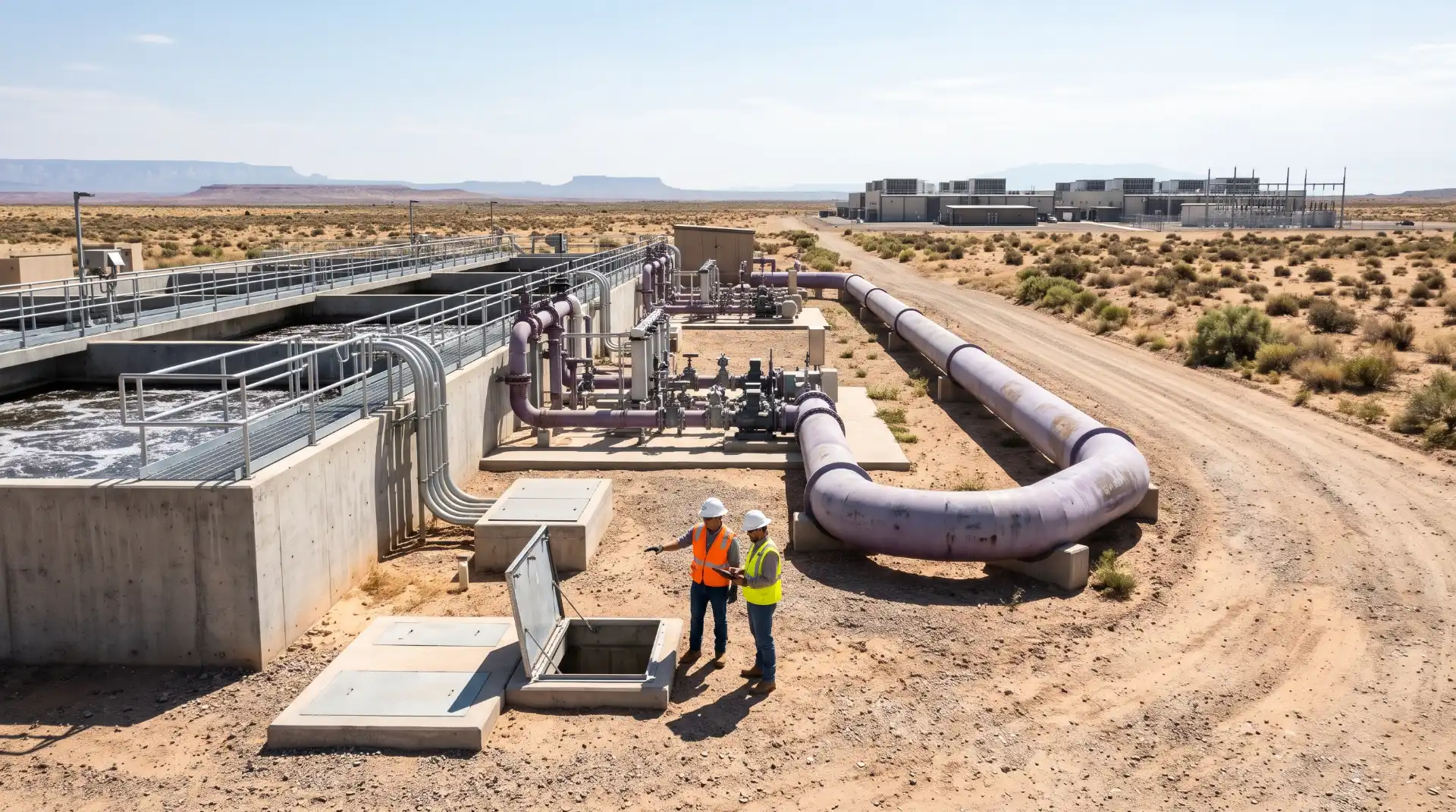 Water Sources: Why Reclaimed Water Should Be Part of the Procurement Discussion
One of the most important decisions in data center development is determining where the facility will obtain its water.
Many communities rely on treated drinking water for industrial customers because municipal distribution systems already provide a dependable supply. However, using drinking-quality water for cooling can create unnecessary competition with residential and essential community needs when alternative sources are technically and economically feasible.
Public procurement professionals should therefore evaluate the possibility of using reclaimed wastewater and other non-potable water sources.
Municipal Drinking Water
Municipal drinking water is treated to meet public health requirements and is generally suitable for many industrial cooling applications.
However, it is also the water supply that residents depend on for drinking, cooking, bathing, sanitation, and other essential activities.
When a large industrial customer uses substantial quantities of treated drinking water, local utilities must consider whether existing treatment and distribution systems can accommodate the additional demand.
A procurement agreement should identify the expected volume, applicable water rates, service limitations, metering requirements, and procedures for responding to supply emergencies.
Communities should also consider whether industrial customers should pay rates that adequately reflect the infrastructure and treatment costs associated with their demand.
Reclaimed Wastewater and Recycled Water
Reclaimed water is wastewater that has undergone treatment so that it can be reused for appropriate purposes.
Depending on its quality and the intended application, reclaimed water may be suitable for industrial cooling, landscaping, certain construction activities, and other non-potable uses.
Using reclaimed water can reduce pressure on drinking water supplies and create additional value from municipal wastewater treatment investments.
For example, a city with an established wastewater treatment facility might evaluate whether treated effluent can be delivered to a nearby data center through a dedicated pipeline.
This arrangement could provide an additional source of industrial water while reducing demand on the drinking water distribution system.
However, reclaimed water projects require careful engineering and financial analysis.
The municipality must evaluate treatment quality, seasonal availability, pipeline construction, pumping costs, storage requirements, maintenance responsibilities, and the cooling system’s water quality requirements.
The developer should also demonstrate that the proposed cooling technology can operate reliably using the available reclaimed water.
Groundwater and Surface Water
Some data center operators may consider obtaining water directly from groundwater wells, rivers, lakes, or reservoirs.
These arrangements introduce additional permitting and environmental considerations.
Groundwater withdrawals may affect aquifer levels, neighboring wells, agricultural operations, and connected surface water resources.
Surface water withdrawals may also be subject to water rights, environmental restrictions, seasonal limitations, and other state-specific requirements.
Public agencies should not assume that direct water sourcing eliminates community impacts.
A project that avoids municipal water connections may still affect regional water availability.
Procurement and development agreements should therefore require appropriate documentation of water rights, permits, withdrawal limits, monitoring obligations, and compliance responsibilities.
Wastewater Management and Water Quality Considerations
Data center water procurement should not focus exclusively on how much water enters the facility.
Officials must also understand what happens to the water after it has been used.
Cooling systems may produce wastewater containing concentrated minerals, treatment chemicals, corrosion inhibitors, and other substances associated with equipment operation.
One important wastewater stream is cooling tower blowdown.
As water evaporates, dissolved minerals become concentrated in the remaining circulating water. Operators periodically remove a portion of that water to maintain appropriate chemical conditions.
If this wastewater enters a municipal sewer system, it may affect wastewater treatment operations depending on its composition and volume.
A local treatment facility may need additional monitoring, treatment capacity, or discharge controls.
Direct discharge to surface waters can create separate environmental compliance obligations.
Public agencies should coordinate with wastewater utilities and environmental regulators before approving major industrial connections.
Establishing Wastewater Discharge Requirements
A data center agreement should identify the expected volume and characteristics of wastewater discharged during normal operations.
The operator should disclose relevant treatment chemicals, anticipated concentrations, disposal methods, and emergency discharge procedures.
Where appropriate, the agreement should require sampling, monitoring, reporting, and corrective action if wastewater exceeds established limits.
These requirements help prevent the municipality from accepting an industrial wastewater responsibility without understanding the potential consequences.
Procurement professionals should coordinate with environmental engineers, wastewater treatment personnel, and legal counsel when developing these provisions.
The contract should also clarify which party is responsible for treatment costs, additional infrastructure, regulatory penalties arising from its own violations, and expenses associated with unexpected discharge conditions.
Hidden Water Consumption: Why Electricity Procurement Also Matters
One aspect of data center water consumption that communities sometimes overlook is the water used indirectly to generate electricity.
A data center may have relatively efficient on-site cooling equipment while relying on electricity produced by power plants that consume significant quantities of water.
The electricity generation process varies by technology.
Some thermal power plants use water for cooling. Other electricity sources, including wind and solar photovoltaic generation during operation, generally have substantially different direct water requirements.
Consequently, the water footprint associated with operating a data center extends beyond the facility’s own cooling equipment.
This creates an additional procurement consideration for communities negotiating energy agreements or evaluating infrastructure developments.
Public agencies should distinguish between direct water consumption at the data center and indirect water consumption associated with electricity generation.
These figures should not be combined without clearly identifying the measurement boundaries.
For example, a developer might report that its facility uses very little water because it relies on air cooling. However, the electricity required to operate that system may be associated with water consumption elsewhere in the regional power system.
The objective is not to demand that every data center operate exclusively on electricity from a particular generation source. Instead, public agencies should encourage transparent reporting that allows decision-makers to understand the broader resource implications of a proposed development.
The U.S. Department of Energy’s federal data center cooling guidance can help procurement professionals understand the relationship between cooling efficiency, electricity consumption, and water performance.
Contract Provisions That Can Protect Local Governments
A major data center development may involve several agreements, including land development contracts, water service agreements, wastewater agreements, infrastructure construction contracts, economic development incentives, and utility arrangements.
These agreements should work together to protect the community’s long-term interests.
A municipality should avoid relying on informal assurances or voluntary sustainability commitments when the project could materially affect local water resources.
Water Consumption Limits and Reporting Obligations
Contracts can establish clearly defined water consumption expectations.
For example, a municipality may require the operator to submit projected annual consumption and maximum daily demand before construction begins.
The agreement can then establish reporting obligations that allow the utility to compare actual consumption against approved projections.
The contract should define how water consumption will be measured, who maintains the meters, how frequently information must be reported, and how discrepancies will be investigated.
Importantly, an annual average should not be the only measurement.
Peak consumption during extreme summer temperatures may place greater pressure on a municipal water system than the annual average suggests.
Drought Response and Emergency Curtailment
Water service agreements should address what happens when a community experiences drought conditions or an emergency affecting its water supply.
A municipality may need to impose temporary restrictions on certain industrial customers to protect public health and essential services.
The agreement should clarify whether the data center can reduce cooling demand, switch to alternative water supplies, activate backup cooling arrangements, or temporarily curtail nonessential operations.
The contract should also establish how emergency decisions will be communicated and which authority determines when restrictions apply.
A particularly important issue is the treatment of residential customers and essential public services during periods of water shortage.
Industrial agreements should not unintentionally create obligations that prevent utilities from responding appropriately to emergencies.
Expansion and Changes in Technology
Large data center campuses are frequently developed in phases.
An operator may initially construct one building and later add additional facilities, computing capacity, or specialized infrastructure.
Each expansion can increase water demand.
The original development agreement should not automatically authorize unlimited future consumption merely because the initial project received approval.
Public agencies can require additional review when proposed expansion would materially change water demand, wastewater discharge, infrastructure requirements, or cooling technology.
A new phase should be evaluated using updated engineering estimates and current information about municipal water capacity.
Financial Responsibility for Infrastructure Improvements
Infrastructure agreements should clearly identify who pays for new pipelines, pumping stations, storage facilities, water treatment upgrades, and other improvements needed to support the project.
The municipality should also consider who will own the infrastructure after construction.
If a developer pays for a pipeline that later becomes part of the municipal water system, the agreement should explain maintenance responsibilities, operating costs, replacement obligations, and access rights.
These provisions reduce the risk that a community will inherit unexpected expenses after the original development agreement has been completed.
Performance Guarantees and Contract Remedies
Public agencies may also consider requiring appropriate financial assurances or performance protections.
Depending on the project and applicable law, these may include construction bonds, infrastructure completion guarantees, maintenance obligations, or other contractual protections.
If an operator repeatedly exceeds agreed water consumption limits, the contract should provide a process for investigation and corrective action.
Possible remedies may include additional reporting, independent engineering reviews, implementation of efficiency improvements, payment of applicable infrastructure costs, or other measures established in the agreement.
Contract remedies should be realistic, legally enforceable, and consistent with the municipality’s authority.
The purpose is to ensure that water conservation commitments remain meaningful after the project becomes operational.
Public Transparency and Community Participation
Data center water consumption can become a sensitive local issue because residents may worry that industrial development will affect household water availability or increase utility costs.
Even when a project has sufficient water capacity, a lack of transparent information can create public distrust.
Communities should therefore make water-related development information accessible whenever permitted by law.
Publish Water Demand Projections
Public agencies can improve transparency by providing understandable summaries of proposed water requirements.
These summaries might include estimated daily and annual consumption, expected peak demand, the proposed water source, anticipated wastewater discharge, and required infrastructure investments.
Technical documents should be available for residents who want more detailed information.
Officials should also explain the difference between water withdrawn, water consumed, and wastewater returned to the municipal system.
Without these distinctions, public discussions can become confusing or misleading.
Hold Public Meetings Before Major Commitments
Public participation should occur early enough to influence decisions.
If a municipality waits until infrastructure contracts have been signed and construction has started, residents may reasonably question whether their feedback can still make a difference.
Public meetings should provide opportunities for water utility representatives, engineers, developers, procurement officials, environmental specialists, and residents to discuss the project.
Officials should be prepared to answer questions about drought planning, utility rates, wastewater management, groundwater impacts, and long-term infrastructure expenses.
The goal should be informed participation rather than simply presenting a completed development proposal.
Protect Sensitive Information Without Sacrificing Accountability
Some data center operators may argue that detailed operational information is commercially sensitive.
Public agencies should distinguish between legitimate confidential business information and information necessary to evaluate public infrastructure impacts.
The public generally has a strong interest in understanding how much water a publicly served industrial facility is expected to consume, what public investments are required, and how the community’s water system will be protected.
Where applicable, agencies should establish reporting arrangements that protect legitimate proprietary information while still providing meaningful public accountability.
Regional Water Planning and Coordination Between Government Agencies
Data center development rarely affects only one government department.
A major project may involve municipal utilities, county planning departments, state environmental agencies, regional water authorities, economic development offices, electricity providers, and other public organizations.
These groups may operate under different legal responsibilities and planning schedules.
Without coordination, one department may approve a development based on economic benefits while another later discovers that the water system cannot accommodate the projected demand.
Regional planning can help prevent this problem.
Evaluating Cumulative Water Demand
A municipality should not assess a proposed data center as though it were the only new industrial customer in the region.
Several projects may be planned within the same watershed or utility service area.
Individually, each facility may appear manageable. Collectively, however, they could create substantial pressure on water supplies.
A regional assessment should examine existing industrial customers, proposed developments, residential growth, agricultural demand, environmental requirements, and future infrastructure needs.
This approach is particularly important in areas where data center campuses are developing rapidly.
It can also help local governments determine whether infrastructure improvements should be coordinated regionally rather than funded through separate, overlapping projects.
Using Geographic Information Systems to Support Water Planning
Modern geographic information systems can help communities evaluate water resources and development proposals.
GIS tools can combine information about water distribution networks, groundwater conditions, watersheds, land use, drought exposure, reservoirs, and industrial development.
Satellite imagery can also help monitor changes in surface water and environmental conditions.
MAPPI’s existing article on Satellite Imagery and GIS for Monitoring U.S. Agriculture and Water Resources provides related background on how geospatial technologies can support water resource monitoring and informed public-sector decisions.
For procurement professionals, this type of information can help identify infrastructure constraints before a project moves into the contract negotiation stage.
GIS does not replace engineering studies or regulatory review. However, it can help public agencies identify areas where additional investigation is necessary.
Establishing Clear Interagency Responsibilities
A coordinated review process should establish which department is responsible for evaluating each part of the project.
For example, a municipal water utility may assess treatment and distribution capacity, while an environmental department reviews wastewater requirements.
The planning department may evaluate land use and development conditions, while procurement personnel examine contracts and financial obligations.
Legal counsel should review whether proposed agreements are consistent with state and local authority.
This division of responsibility can reduce duplicated work and prevent important issues from being overlooked.
It also creates a clearer record of how the final development decision was reached.
Missouri Communities: Special Considerations for Public Purchasing Professionals
Although data center water consumption is a national concern, Missouri communities should evaluate it according to their own water resources, infrastructure capacity, and development conditions.
Missouri has a combination of municipal water systems, rivers, reservoirs, groundwater resources, agricultural water demands, and industrial customers.
The fact that a community is not located in a traditionally arid region does not mean that every proposed industrial water demand can be accommodated without consequences.
Local water systems differ in their treatment capacity, distribution infrastructure, source reliability, and ability to respond to emergencies.
Public purchasing professionals in Missouri can contribute by making water requirements part of early project evaluation rather than waiting until infrastructure contracts are nearly complete.
For example, a city considering a data center development should coordinate with its water utility before negotiating commitments involving water service or publicly funded infrastructure.
The municipality should understand whether the existing system can support the development and whether additional investment would be necessary.
Missouri agencies should also examine applicable state and local requirements governing public water systems, groundwater withdrawals, surface water use, wastewater discharge, and industrial development.
The relevant authority may vary depending on the water source, project location, and type of discharge.
Protecting Taxpayer Interests in Economic Development Agreements
Large technology companies may offer substantial economic development benefits, including construction employment, permanent jobs, tax revenue, and investment in local infrastructure.
These benefits should be evaluated alongside the public costs associated with supporting the development.
A municipality should consider whether promised employment levels are realistic, whether projected tax revenue depends on future expansion, and whether the developer is receiving public incentives or infrastructure assistance.
Water-related expenses should be included in this analysis.
For example, a project may appear financially attractive because the developer promises to pay for a new pipeline. However, the municipality may still face long-term expenses for pumping, treatment, monitoring, and maintenance.
Public procurement professionals can help ensure that these costs are documented and considered before agreements are approved.
Applying Responsible Purchasing Principles
MAPPI has previously discussed the importance of supplier diversity and small business engagement in public procurement.
A similar principle of responsible procurement applies to major infrastructure projects.
Public agencies should evaluate not only the developer’s ability to finance and construct a facility but also its ability to meet long-term operating responsibilities.
Where appropriate, municipalities can encourage qualified local engineering firms, water treatment providers, environmental consultants, construction companies, and monitoring technology suppliers to participate in project-related procurement opportunities.
This can support local economic participation while ensuring that the community receives the technical expertise needed to manage a complex infrastructure development.
However, local participation should always be structured consistently with applicable competition and procurement requirements.
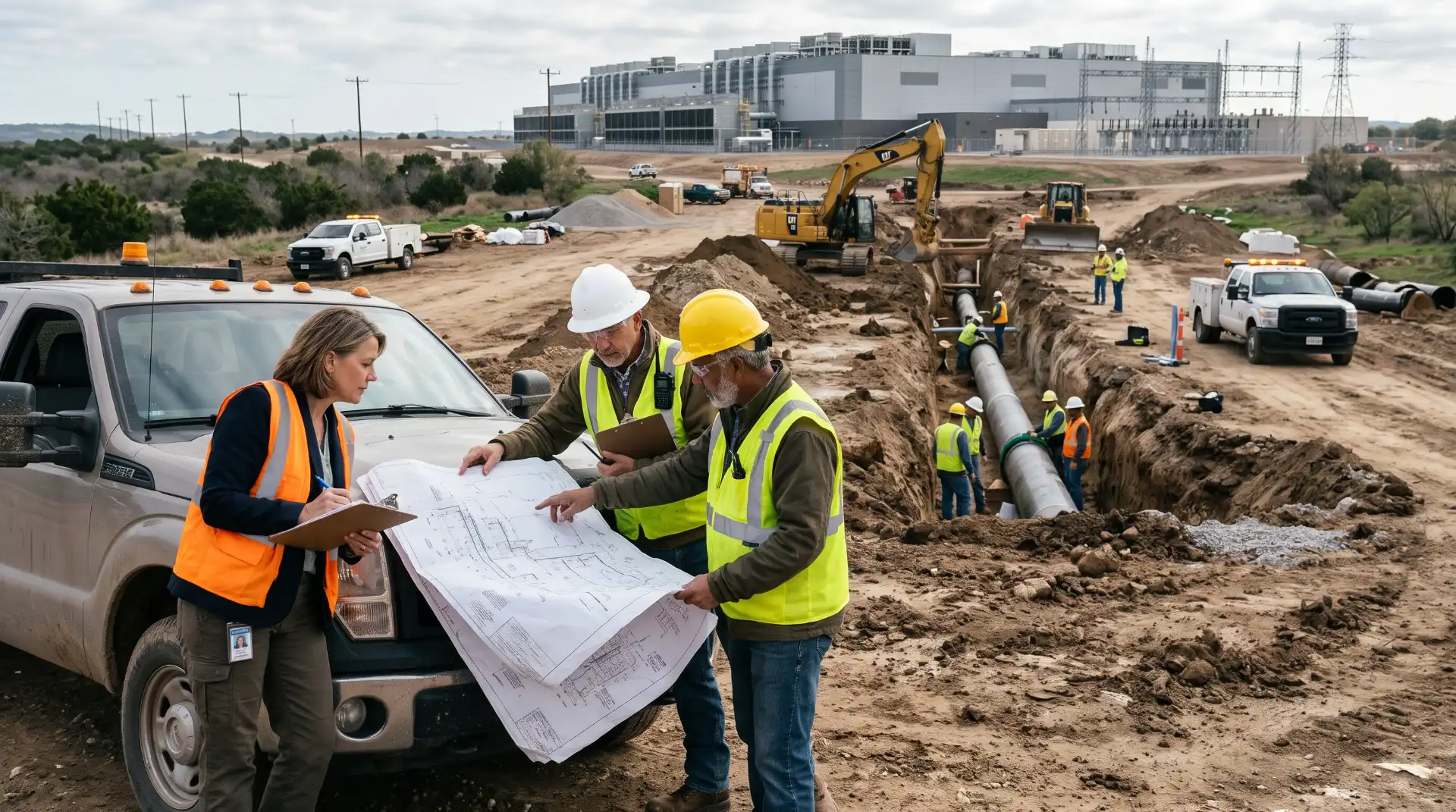 The Financial Risks of Poor Data Center Water Planning
Water-related problems can become expensive when they are discovered after a development has been approved.
The initial project budget may not account for all the costs associated with increased industrial demand.
A municipality may need to accelerate infrastructure improvements, purchase additional equipment, expand treatment capacity, or obtain alternative water supplies.
These expenses can affect utility budgets and potentially influence rates charged to other customers.
Unexpected Infrastructure Expansion
If actual water consumption exceeds original projections, the municipality may need to increase distribution capacity.
This can involve constructing larger pipelines, adding pumping stations, expanding storage facilities, or improving treatment systems.
Such projects may require engineering studies, regulatory approvals, financing, and lengthy construction schedules.
The costs can become particularly challenging if the municipality has already committed to serving the data center under an agreement that does not adequately address future infrastructure expenses.
Underestimated Operating Costs
Even when a data center does not require major new construction, increased water demand can raise ongoing utility expenses.
Water treatment, pumping, monitoring, maintenance, and wastewater processing all require financial resources.
If industrial water rates do not adequately reflect these costs, residential and other customers may indirectly support part of the expense.
Public agencies should therefore ensure that utility rate structures and development agreements are evaluated carefully.
Industrial customers should be treated consistently with applicable rate-setting rules while ensuring that the utility can recover appropriate costs.
Financial Exposure When a Project Changes Ownership
Data centers can be sold, transferred, expanded, or operated by different companies over time.
A municipality should not assume that the original developer will remain responsible for every obligation throughout the facility’s operating life.
Contracts should establish how water service obligations, reporting requirements, infrastructure responsibilities, and outstanding financial commitments transfer when ownership changes.
The agreement should also address facility closure, abandonment, and the removal or transfer of privately owned infrastructure.
These provisions help protect the community if the project’s commercial circumstances change.
Practical Procurement Checklist for Communities Considering Data Center Projects
Public agencies do not need to develop an entirely new procurement system to address data center water consumption. They can build on existing purchasing, engineering, contract management, and infrastructure planning procedures.
The most important step is to ensure that water-related questions are addressed early enough to influence project design and contractual negotiations.
The following considerations can help local governments organize their review.
Before Issuing a Solicitation or Approving a Development Proposal
The agency should identify the available water sources and determine whether existing infrastructure has sufficient capacity.
Officials should also establish whether the proposed development will require new public investment and whether those costs can be recovered from the developer.
The project team should obtain preliminary estimates of annual water consumption, peak daily demand, construction-related water use, and anticipated wastewater discharge.
A preliminary assessment should also identify drought exposure, groundwater concerns, and any competing demands from existing customers.
At this stage, the agency should determine which departments and external authorities must participate in the review.
During Vendor Evaluation and Contract Negotiations
The agency should require detailed cooling system information and comparable water performance data.
Proposals should explain the expected water source, cooling technology, water reuse opportunities, electricity requirements, and wastewater management procedures.
The evaluation team should compare total lifecycle expenses rather than focusing exclusively on initial construction costs.
Contracts should include measurable reporting requirements, appropriate water performance expectations, drought response procedures, and clear financial responsibilities.
Officials should also examine whether the developer has the technical and financial resources to operate the facility reliably over the proposed contract period.
After Construction and During Facility Operations
The municipality should monitor actual water consumption and compare it with the original projections.
Monthly or quarterly reporting can help identify unexpected increases before they become major problems.
The agency should also periodically review cooling system performance, water reuse arrangements, wastewater discharge, and compliance with contractual obligations.
If the facility expands or replaces major cooling equipment, officials should determine whether the changes require additional review.
Contract management should continue throughout the facility’s operating life rather than ending when construction is complete.
Suggested Procurement Evaluation Framework
The following table provides an example of how a public agency might organize its evaluation criteria. Actual scoring weights should be established before solicitation and adapted to applicable procurement laws and project requirements.
| Evaluation Area | What the Agency Should Examine |
|---|---|
| Water consumption | Annual use and peak daily demand |
| Cooling technology | Evaporative, air, liquid, or immersion cooling |
| Water efficiency | WUE and supporting performance data |
| Water source | Municipal, reclaimed, groundwater, or surface water |
| Water reuse | Recycling capabilities and non-potable alternatives |
| Wastewater management | Discharge quality, treatment, and monitoring |
| Infrastructure costs | Pipelines, pumping, storage, and treatment upgrades |
| Drought resilience | Curtailment and alternative supply arrangements |
| Lifecycle costs | Long-term operating and maintenance expenses |
| Contract accountability | Reporting, verification, and corrective measures |
This framework helps ensure that water consumption is considered alongside other important infrastructure and procurement requirements.
Vendor Due Diligence: Evaluating the Companies Behind the Technology
Data center development often involves multiple contractors and specialized service providers.
A project may depend on engineering firms, cooling equipment manufacturers, construction companies, water treatment specialists, utility contractors, technology providers, and long-term facility operators.
A developer’s initial proposal may appear comprehensive, but its ability to meet water efficiency commitments depends on the performance of the companies responsible for designing, installing, and maintaining the systems.
Public agencies should therefore evaluate the relevant experience and qualifications of important contractors.
This may include examining previous projects, cooling technology experience, financial stability, maintenance capabilities, regulatory compliance history, and the availability of replacement equipment.
For projects involving complex infrastructure, procurement teams should also understand which subcontractors are responsible for critical components.
A cooling system may fail to deliver its projected performance if a specialized component is poorly installed or maintained.
Similarly, a water treatment system may become inefficient if maintenance responsibilities are unclear or the operator lacks appropriate technical expertise.
Public buyers can use principles discussed in MAPPI’s article on supply chain risk management for public agencies when evaluating contractors, suppliers, and critical infrastructure dependencies.
The goal is to identify potential weaknesses before they affect public services or create additional expenses.
Measuring Performance After a Data Center Becomes Operational
One of the most important lessons for public agencies is that approving a project does not guarantee that its water performance will match the original proposal.
A developer may provide reasonable projections during the planning process, but actual operating conditions can change.
The facility may install more computing equipment than initially anticipated. AI workloads may increase. Weather conditions may become more demanding. Cooling equipment may be modified to accommodate newer processors.
These changes can affect total water consumption.
A strong monitoring program helps the municipality identify differences between projected and actual performance.
Establishing a Baseline
Before the facility begins operating, the agency should document the approved water consumption projections and the assumptions used to calculate them.
This baseline should include expected computing capacity, cooling technology, operating schedules, water sources, and estimated seasonal demand.
Without a documented baseline, it can be difficult to determine whether actual consumption represents normal operating variation or a significant departure from approved expectations.
Monitoring Water Consumption Continuously
Modern water meters and monitoring systems can provide information about industrial consumption at regular intervals.
Where appropriate, utilities can use automated meter-reading technology to identify unusual demand patterns and compare consumption against expected operating conditions.
Monitoring can also help detect leaks, equipment problems, and unexpected increases during periods of high temperatures.
The operator should provide information in a format that municipal utility personnel can review and verify.
Conducting Periodic Independent Reviews
For particularly large facilities, public agencies may require independent assessments of water performance.
These assessments can examine actual consumption, WUE, cooling system efficiency, water reuse, wastewater generation, and compliance with contractual requirements.
An independent review is especially useful when the facility has undergone a major expansion or changed its cooling technology.
The results can inform future contract amendments, infrastructure planning, and utility rate discussions.
Responding to Performance Problems
When monitoring identifies unexpected water consumption, the municipality should have a clear procedure for investigating the issue.
The first step should be determining whether the increase resulted from an equipment problem, unusual weather, increased computing capacity, a leak, or another operational change.
The operator may then be required to submit a corrective action plan.
If the problem involves a contractual violation, the agency should follow the remedies established in the agreement.
This approach supports accountability while giving the operator an opportunity to correct legitimate technical problems.
The Future of Sustainable Data Center Procurement in the United States
The data center industry is evolving rapidly, and water efficiency will likely become a more important consideration in infrastructure development and public purchasing.
Several trends could influence how local governments approach future projects.
Higher-Density Artificial Intelligence Infrastructure
Artificial intelligence workloads require powerful processors that can generate substantial heat.
As computing density increases, cooling system design becomes more important.
Some newer facilities are adopting direct-to-chip liquid cooling and other advanced technologies intended to improve thermal management.
These developments may reduce water requirements in certain configurations, but their actual performance must be evaluated on a facility-specific basis.
Public agencies should avoid assuming that every new generation of data center equipment will automatically reduce water consumption.
Greater Use of Reclaimed Water
Municipalities may increasingly consider reclaimed water infrastructure as a way to support industrial development without relying exclusively on drinking water.
A data center located near a wastewater treatment facility may present an opportunity to develop a dedicated reclaimed water system.
Such projects could create benefits for both the industrial customer and the municipality.
However, their feasibility depends on treatment requirements, pipeline costs, available wastewater volumes, water quality, and long-term operating arrangements.
More Detailed Water Reporting
Public officials, residents, and researchers are seeking better information about data center water consumption.
The Congressional Research Service has highlighted the limitations of available facility-level water use information and the challenges associated with understanding local water impacts.
Every CRS Report
More consistent reporting could help communities compare proposed developments, identify emerging risks, and improve infrastructure planning.
Public procurement can contribute by requiring standardized disclosures as part of development agreements and technology infrastructure contracts.
Water Efficiency as a Competitive Procurement Requirement
Historically, data center evaluations often emphasized land availability, electricity access, network connectivity, construction costs, and tax incentives.
Water availability is becoming another important factor.
Communities may increasingly evaluate whether a proposed facility can operate efficiently without placing excessive pressure on public resources.
This could encourage developers to compete through better cooling designs, reclaimed water arrangements, more efficient equipment, and improved monitoring systems.
Public agencies should establish reasonable and transparent requirements so that water efficiency becomes a meaningful procurement consideration rather than an arbitrary barrier to competition.
Stronger Integration of Infrastructure and Economic Development Planning
Data center development decisions should increasingly be evaluated alongside broader regional infrastructure plans.
A community should understand how a proposed facility fits into long-term water, electricity, transportation, and land-use priorities.
The economic benefits of a project should be considered alongside the cost of providing essential public infrastructure.
This integrated approach can help communities avoid approving projects that create financial or resource commitments they cannot sustainably support.
Common Mistakes Public Agencies Should Avoid
Even well-intentioned public agencies can make mistakes when evaluating large data center developments.
One common mistake is relying entirely on the developer’s initial water consumption estimate. Developers may have strong technical expertise, but public agencies should independently evaluate important assumptions, particularly when substantial public resources are involved.
Another mistake is focusing only on annual water consumption. Peak daily demand, seasonal variation, and drought conditions can be more important when determining whether a municipal water system can support a facility.
Agencies should also avoid treating closed-loop cooling as a guarantee of zero water consumption. The complete cooling process must be examined, including how heat is ultimately released into the environment.
A further mistake is evaluating water consumption separately from electricity use. A cooling system that saves water may require additional electricity, creating a different set of resource and infrastructure costs.
Public agencies should also avoid approving unlimited future expansion without updated water assessments. A development that initially appears manageable may create substantially greater demand after several construction phases.
Finally, municipalities should not assume that a developer’s voluntary sustainability commitments will remain enforceable after construction. Important requirements should be incorporated into appropriate contracts, service agreements, and development conditions.
Avoiding these mistakes requires coordination between procurement professionals, engineers, utilities, financial administrators, environmental specialists, and legal counsel.
Conclusion: Responsible Procurement Must Include Water Sustainability
Data center water consumption is becoming an important consideration for communities across the United States as demand for cloud computing, artificial intelligence, and digital infrastructure continues to expand.
Although data centers provide valuable economic and technological benefits, their cooling systems can place substantial demands on local water supplies.
For municipalities, the challenge is not simply deciding whether a new facility can obtain enough water to begin operating. The more important question is whether the project can operate responsibly over its entire expected lifespan without creating unnecessary pressure on existing customers, public infrastructure, or regional water resources.
Public procurement can help communities answer that question.
By requiring detailed water demand assessments, evaluating alternative cooling technologies, considering reclaimed water, examining wastewater management, and incorporating measurable performance standards into contracts, agencies can make better-informed development decisions.
Water usage effectiveness and other technical indicators can help compare proposals, but they should be considered alongside total consumption, peak demand, energy requirements, local water availability, and lifecycle expenses.
Public agencies should also establish clear contractual responsibilities for infrastructure investment, monitoring, reporting, drought response, future expansion, and corrective action.
These measures help prevent the transfer of unexpected expenses and resource risks to taxpayers and existing utility customers.
For Missouri communities and other U.S. local governments, the broader lesson is that modern infrastructure procurement must consider more than the technology being installed or the economic investment being promised.
It must also consider the resources required to operate that technology responsibly.
As data center development continues, communities that integrate water sustainability into procurement and infrastructure planning will be better positioned to attract investment while protecting essential public resources.
Responsible public purchasing is not about preventing technological development. It is about ensuring that economic growth, infrastructure investment, and environmental stewardship can work together.
Ultimately, the most successful data center projects will be those that provide technological and economic value without placing unreasonable long-term demands on the communities that support them.
Additional Considerations for Public Procurement Professionals
Before approving a major data center development, public purchasing professionals should remember that water-related commitments need to remain measurable throughout the life of the project.
A proposal that appears financially attractive today may create significant infrastructure costs years later if water demand increases or cooling technology changes.
The strongest procurement strategy is one that connects the initial project evaluation with ongoing contract administration.
Public agencies should maintain a documented record of approved water consumption projections, infrastructure commitments, cooling system specifications, reporting obligations, and any changes authorized after construction.
This documentation can help future administrators understand why particular decisions were made and whether the facility continues to meet its obligations.
It can also support more informed negotiations when service agreements are renewed, infrastructure is expanded, or the facility changes ownership.
For communities investing in large technology infrastructure, careful procurement is ultimately a form of long-term resource protection.