

Public procurement has always required agencies to balance price, quality, competition, compliance, and taxpayer value. In 2026, however, another consideration has moved much closer to the center of purchasing decisions: supply chain risk.
Government buyers cannot assume that a contract award will automatically translate into reliable delivery. A supplier may face shortages, cybersecurity incidents, transportation disruptions, financial instability, workforce constraints, regulatory changes, or problems involving its own subcontractors. Any one of those issues can affect an agency’s ability to obtain essential technology, equipment, materials, professional services, and everyday operating supplies.
For public agencies, the consequences can extend well beyond an inconvenient delivery delay. A disrupted supply chain can interfere with emergency response, public works, school operations, transportation, healthcare services, information technology, water systems, and other public functions.
That is why supply chain risk management for public agencies is becoming an increasingly important part of modern procurement. Rather than reacting after a vendor fails to perform, procurement teams can identify vulnerabilities earlier, strengthen solicitations and contracts, monitor suppliers throughout the relationship, and develop practical contingency plans.
The objective is not to eliminate every possible risk. That would be unrealistic. The goal is to understand which risks could seriously affect public operations and then make informed procurement decisions that improve resilience without unnecessarily restricting competition.
Why Supply Chain Risk Deserves More Attention in 2026
The supply chains supporting American government agencies are more interconnected than they may initially appear. A city may purchase technology from a U.S.-based reseller, but the equipment may contain components manufactured in several countries. A transportation department may contract with a regional supplier whose products depend on distant manufacturing facilities. A school district may rely on a software provider that, in turn, depends on cloud hosting, cybersecurity vendors, payment systems, and third-party developers.
This complexity creates dependencies that procurement professionals may not see when they review a bid or proposal.
Recent disruptions have also demonstrated how quickly circumstances can change. Transportation bottlenecks, extreme weather, cyberattacks, geopolitical developments, tariffs, manufacturing interruptions, labor shortages, and unexpected spikes in demand can all affect the availability and price of products.
For public organizations, these problems are particularly challenging because procurement is usually governed by established rules concerning competition, bidding, documentation, transparency, and the responsible use of public money. An agency cannot always switch suppliers as quickly as a private company might.
This makes preparation especially valuable. Supply chain risk management allows agencies to consider potential disruption before a crisis forces them to make difficult purchasing decisions under severe time pressure.
Supply Chain Risk Is More Than a Shipping Problem
When people hear the phrase “supply chain risk,” delayed cargo and unavailable products often come to mind. Those are important concerns, but government procurement teams should view supply chain risk much more broadly.
A supplier’s ability to perform may be affected by financial problems, cybersecurity weaknesses, dependence on a single manufacturer, shortage of specialized workers, regulatory restrictions, inadequate inventory, subcontractor failures, poor quality control, or limited disaster recovery capabilities.
Technology acquisitions introduce another dimension. Hardware and software can create cybersecurity supply-chain concerns when agencies have limited visibility into how products were developed, where components originated, which third parties support them, and how vulnerabilities are managed.
The National Institute of Standards and Technology has developed extensive guidance on cybersecurity supply chain risk management. Its framework encourages organizations to integrate supplier and supply-chain considerations into broader risk-management activities instead of treating them as an isolated technical issue.
For government buyers, the broader lesson is clear: evaluating a supplier should involve more than determining whether the company can meet a specification at an acceptable price.
Procurement professionals increasingly need to ask whether that supplier can continue meeting the requirement when circumstances become difficult.

Start by Identifying Mission-Critical Purchases
Not every purchase requires the same level of supply chain analysis.
Applying an extensive risk assessment to every box of office supplies would consume resources without delivering much value. Agencies can instead prioritize procurement categories based on their importance to operations and the consequences of disruption.
A useful starting point is to identify products and services that are essential to public safety, infrastructure, technology, healthcare, emergency response, transportation, utilities, or other mission-critical functions.
Consider a municipal fleet department. A temporary shortage of a nonessential accessory may have little operational impact. A shortage of replacement parts needed to keep police vehicles, ambulances, snowplows, or utility trucks operating could be much more serious.
The same principle applies to technology. An unavailable peripheral device may be inconvenient, while failure of a critical network service could affect an entire agency.
Once critical purchases have been identified, procurement teams can devote more attention to supplier concentration, lead times, alternative products, inventories, geographic exposure, cybersecurity, and continuity planning.
Know Where Your Supplier Depends on Other Suppliers
One of the most difficult aspects of supply chain risk management is that the agency’s direct contractor may represent only one part of the actual supply chain.
A distributor may depend on a manufacturer. The manufacturer may depend on specialized component suppliers. A software vendor may depend on external cloud infrastructure. A construction contractor may rely on subcontractors and material suppliers. A professional services firm may rely on a limited number of specialists.
Public buyers do not necessarily need complete visibility into every supplier relationship. However, they should understand important dependencies when failure could significantly disrupt performance.
For higher-risk procurements, agencies may consider requesting information about critical subcontractors, manufacturing locations, major dependencies, continuity plans, expected lead times, and alternative sources.
The purpose should be risk awareness, not the unnecessary collection of information. Procurement requirements should remain proportional to the value and criticality of the acquisition.
Supplier Due Diligence Is Becoming More Important
Supplier due diligence has traditionally focused on matters such as qualifications, references, responsibility, financial capability, licenses, experience, and past performance. In 2026, agencies may benefit from expanding that analysis for critical purchases.
NIST reinforced this principle in July 2026 when it released its finalized Cybersecurity Supply Chain Risk Management Due Diligence Assessment Quick-Start Guide. The guidance focuses on conducting reasonable research into potential suppliers before acquisition decisions are made.
Although public agencies operate under different laws, rules, and procurement structures, the underlying concept is broadly useful: important supplier risks are usually easier to address before a contract is signed than after performance problems emerge.
Depending on the procurement, agencies may examine a company’s operational history, ownership information, financial condition, cybersecurity practices, litigation or regulatory concerns, relevant certifications, business continuity arrangements, and ability to obtain critical materials.
Due diligence should be documented and applied consistently. Public procurement must remain fair and defensible, so risk considerations should not become an excuse for arbitrary supplier exclusion.
Cybersecurity Is Now a Supply Chain Issue
Government purchasing and cybersecurity are increasingly connected.
Agencies routinely purchase software, connected devices, cloud services, communications equipment, security systems, fleet technology, data platforms, and other products that interact with public networks or sensitive information.
Every external technology provider can create dependencies beyond the agency’s direct control.
NIST Special Publication 800-161 Rev. 1, updated in 2024, provides a framework for cybersecurity supply chain risk management. It addresses risks including malicious functionality, counterfeit products, vulnerable products, poor development practices, and limited visibility into how technology is developed and delivered.
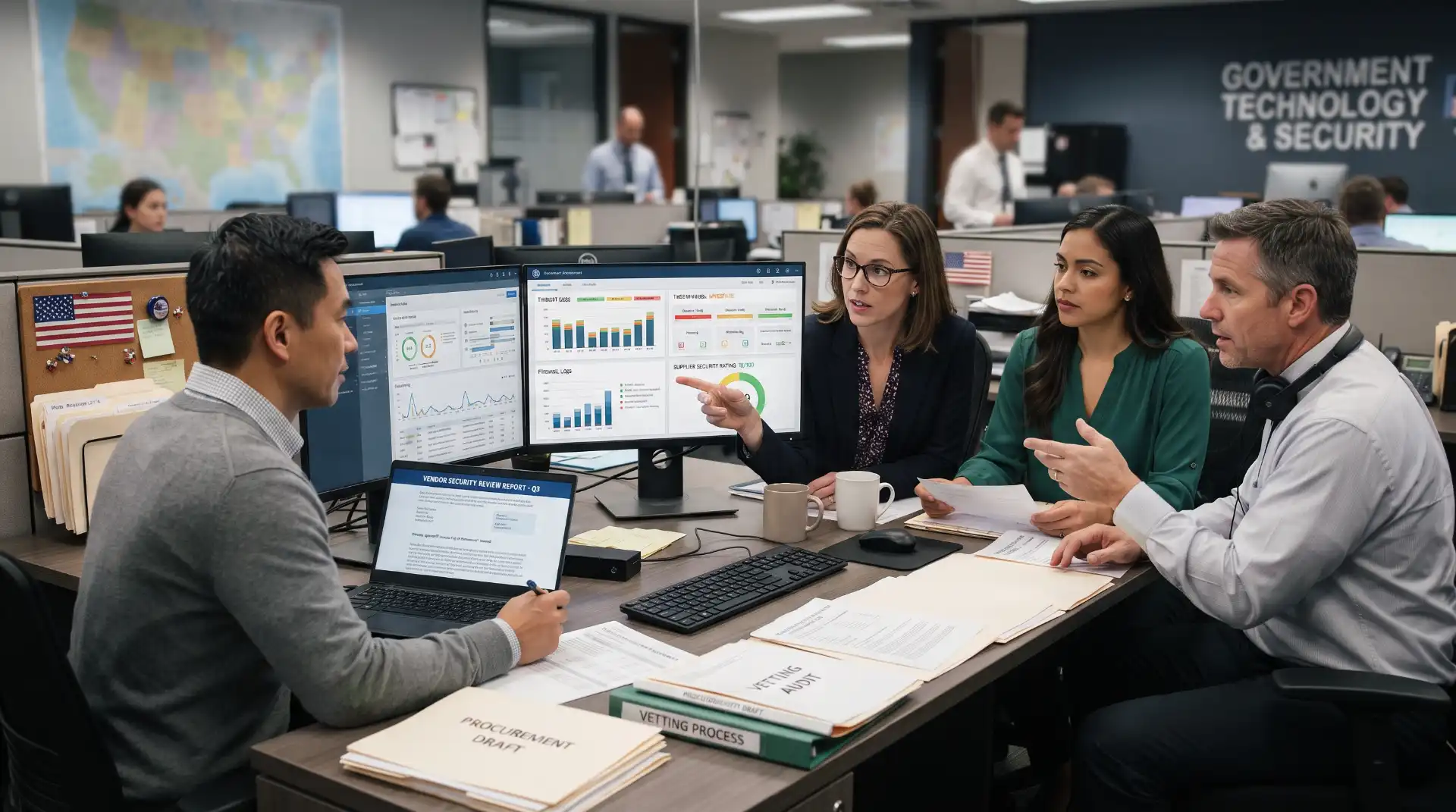
Government procurement teams do not need to become cybersecurity engineers, but procurement and information security professionals should work together when acquiring systems that create meaningful cyber risk.
Solicitations can establish appropriate security expectations, incident-notification requirements, access controls, vulnerability management responsibilities, data-protection standards, and requirements related to subcontractors or third-party service providers.
Agencies considering broader modernization can also review MAPPI’s article on how technology is transforming public purchasing, which discusses the growing role of digital procurement tools and cybersecurity in protecting procurement information.
Avoid Excessive Dependence on a Single Source
Supplier concentration can create significant operational vulnerability.
If only one vendor, manufacturer, geographic region, distribution center, or transportation route can satisfy an agency’s requirement, a single disruption may affect the entire supply chain.
Single-source dependence is not always avoidable. Specialized equipment, proprietary software, compatible replacement parts, standardized systems, and legitimate sole-source procurements may leave agencies with limited options.
However, agencies should at least understand when concentration exists.
For appropriate categories, procurement teams can evaluate whether multiple suppliers are available, whether substitute products meet operational requirements, whether contracts can support multiple awards, and whether cooperative purchasing arrangements provide additional sourcing options.
Diversification should not mean maintaining unnecessary vendors simply for the sake of having more vendors. It should be based on a realistic assessment of operational risk.
Do Not Evaluate Price Without Evaluating Reliability
Lowest price does not always equal lowest risk.
A supplier offering an unusually low price may still represent poor value if it cannot maintain inventory, meet delivery schedules, manage subcontractors, respond to emergencies, or satisfy quality standards.
Public agencies must follow the procurement method and evaluation criteria required by applicable law and policy. Where permitted, however, procurement documents can incorporate relevant factors such as experience, delivery capability, service levels, technical qualifications, supply availability, quality assurance, and past performance.
This becomes particularly important for critical requirements where failure could cost the agency significantly more than the original purchase price.
An agency purchasing infrastructure equipment, for example, may incur substantial operational costs if a low-cost supplier repeatedly misses delivery deadlines.
Good procurement decisions consider total value within the boundaries of applicable purchasing law rather than treating acquisition price as the only meaningful measure.
Build Risk Protections Into Contracts
Supply chain risk management should continue after supplier selection.
Well-designed contract provisions can clarify expectations before disruption occurs. Depending on the procurement, contracts may address delivery schedules, inventory requirements, substitution procedures, quality standards, business continuity, cybersecurity, notification of significant disruptions, subcontractor changes, data protection, escalation procedures, and termination rights.
Government buyers should work with legal counsel when drafting provisions that affect contractual remedies, liability, termination, cybersecurity obligations, or regulatory compliance.
Contracts should also avoid unrealistic requirements that unnecessarily increase costs or discourage qualified suppliers from competing.
For example, demanding extremely large reserve inventories from every contractor may sound like a strong resilience strategy but could significantly increase pricing. A risk-based approach is usually more effective.
The contract should reflect the importance of the service and the realistic consequences of failure.
Monitor Supplier Performance Throughout the Contract
Vendor risk does not end when the purchase order is issued.
Supplier conditions can change throughout a multiyear contract. A financially stable vendor can experience a downturn. A manufacturer may discontinue a product. A cybersecurity incident can affect a service provider. A subcontractor can fail. Lead times can increase dramatically.
Contract management therefore plays an important role in supply chain resilience.
Procurement teams and operating departments can monitor delivery performance, product quality, service levels, incident reports, recurring shortages, unresolved complaints, changes in lead time, and other indicators of supplier health.
The objective is to detect patterns before they become serious operational problems.
A vendor that misses one shipment may simply have experienced an isolated issue. A vendor whose delivery times continuously deteriorate may indicate a larger supply chain problem that requires attention.
Use Data to Spot Emerging Procurement Risks
Public procurement technology can make supply-chain monitoring more systematic.
Electronic procurement systems, enterprise resource planning platforms, contract-management systems, inventory software, and supplier databases can provide agencies with useful information about spending patterns and vendor performance.
Agencies may be able to identify categories where a large portion of spending flows through one supplier, products with increasingly long lead times, vendors with recurring delivery problems, contracts approaching expiration, or departments repeatedly making emergency purchases for the same items.
These patterns can help procurement teams decide where deeper analysis is warranted.
Technology should support professional judgment rather than replace it. Data may reveal that an agency purchases 90 percent of a critical category from one supplier, but procurement professionals still need to determine whether that concentration represents unacceptable risk and what alternatives are practical.
Artificial Intelligence Can Help, but It Requires Oversight
Artificial intelligence is also beginning to influence procurement analytics and supplier monitoring.
AI-powered systems may help agencies analyze spending, identify unusual purchasing patterns, categorize suppliers, compare contract data, flag potential risks, or summarize large volumes of supplier information.
Those capabilities can improve efficiency, particularly for agencies managing thousands of transactions.
At the same time, AI-generated recommendations should not automatically determine which companies are considered risky or eligible for government contracts. Data quality, explainability, bias, privacy, cybersecurity, and human oversight remain important.
Public agencies exploring these technologies can review MAPPI’s coverage of responsible AI and public procurement alongside broader procurement modernization resources.
The strongest approach is usually one in which technology identifies potential issues and qualified procurement professionals determine whether those issues are meaningful.
Prepare for Emergency Procurement Before the Emergency
A supply chain disruption can quickly become an emergency purchasing problem.
During severe weather, natural disasters, public health emergencies, infrastructure failures, or other urgent events, agencies may suddenly require large quantities of products that are simultaneously in high demand elsewhere.
Waiting until the emergency begins to identify suppliers can limit options.
Public agencies can improve readiness by maintaining supplier information, reviewing emergency procurement authority, identifying critical commodities, establishing cooperative relationships, understanding alternate sourcing options, and ensuring that purchasing staff know applicable documentation requirements.
MAPPI’s guidance on best practices for emergency procurement during natural disasters provides a useful companion topic for agencies developing continuity plans.
Emergency authority can provide flexibility, but it should not replace preparation. The better an agency understands its likely needs and supplier network before a disruption, the more effectively it can respond while maintaining accountability.
Consider Geographic and Climate Exposure
Where products originate can matter as much as who sells them.
A government buyer may have several approved suppliers but still face concentrated risk if all of those suppliers rely on the same manufacturing region, port, transportation corridor, or distribution center.
Severe storms, floods, wildfires, winter weather, earthquakes, drought conditions, and other events can affect production and transportation across large areas.
For especially important commodities, agencies may benefit from understanding whether alternative supply routes or geographically diverse sources exist.
This does not require public buyers to predict individual disasters. Rather, procurement professionals can identify where a critical supply chain has obvious single points of failure and determine whether reasonable alternatives are available.
Inventory Strategy Should Match Operational Risk
For decades, many organizations focused on minimizing inventory and receiving products as close as possible to when they were needed. That approach can reduce storage costs, but it can also create vulnerability when supply chains are unstable.
Public agencies should not respond by stockpiling every commodity. Excess inventory can create its own costs through storage, expiration, deterioration, obsolescence, and tied-up public funds.
Instead, inventory decisions can reflect operational importance, replacement lead times, storage requirements, availability of substitutes, and likelihood of disruption.
A critical replacement component that takes six months to manufacture deserves a different strategy than a widely available office product that can be purchased from numerous suppliers.
This type of risk-based inventory planning can help agencies maintain continuity without spending unnecessarily.

Supplier Diversity Can Strengthen Resilience
Supplier diversity initiatives are often discussed in connection with economic opportunity and access to public contracts. They can also contribute to a broader supplier network.
Expanding outreach to qualified small, local, minority-owned, women-owned, veteran-owned, disadvantaged, and other businesses may help agencies discover vendors they would not otherwise encounter.
A broader vendor pool can sometimes provide alternatives when established supply chains are disrupted.
However, supplier diversity and supply chain resilience should not be treated as identical objectives. Every supplier still needs to satisfy applicable qualification, responsibility, performance, and procurement requirements.
The larger lesson is that healthy competition and strong supplier outreach can reduce excessive reliance on a small number of familiar vendors while creating opportunities for capable businesses.
Create a Practical Supply Chain Risk Framework
Public agencies do not need an overly complicated system to begin improving supply chain resilience.
A practical framework can start by identifying critical categories, determining major vulnerabilities, evaluating suppliers based on the level of risk, incorporating appropriate protections into solicitations and contracts, monitoring performance, and creating contingency options for important purchases.
Responsibilities should also be clear. Procurement cannot manage every supply chain issue alone.
Information technology teams may need to assess cyber risks. Emergency managers may identify critical disaster supplies. Finance teams may review vendor stability. Legal counsel may review contractual protections. Operating departments understand which products and services are essential to their missions.
Supply chain risk management works best when procurement coordinates these perspectives rather than trying to own every part of the process.
Use Authoritative Guidance When Developing Procurement Practices
Government buyers developing supply chain risk practices should rely on authoritative standards and guidance when appropriate.
One particularly useful resource is the National Institute of Standards and Technology’s Cybersecurity Supply Chain Risk Management guidance. NIST SP 800-161 Rev. 1 provides a structured approach to identifying, assessing, and mitigating cybersecurity risks throughout supply chains.
In 2026, NIST also finalized a Due Diligence Assessment Quick-Start Guide designed to help organizations conduct reasonable supplier research before procurement decisions. While individual public agencies must follow their own statutes, regulations, ordinances, procurement policies, and legal requirements, these resources provide useful concepts for building risk-based supplier assessment programs.
Questions Government Buyers Should Ask Before a Critical Award
Supply chain risk management often begins with a few practical questions rather than a complicated scoring model.
Where does the product or service actually come from? How long would it take to replace the supplier? Does the vendor rely on a single manufacturer or subcontractor? Are alternative products available? How would a cyber incident affect service delivery? What happens if transportation is disrupted? Does the agency have sufficient inventory to withstand a delay? How quickly must the vendor notify the agency about a serious disruption?
For a routine low-risk acquisition, many of these questions may be unnecessary. For mission-critical technology, infrastructure, emergency equipment, or essential operating supplies, they can reveal vulnerabilities that price comparisons alone will never show.
Resilient Procurement Is Ultimately About Public Service
Supply chain risk management is not simply about protecting contracts. It is about helping agencies continue serving the public when normal purchasing conditions are disrupted.
A transportation agency needs parts to keep vehicles operating. A school district needs food, technology, and classroom supplies. A public works department needs equipment and materials. Emergency responders need reliable access to critical products. Government IT departments need secure and dependable technology providers.
Each of those outcomes depends partly on procurement.
In 2026, strong public purchasing programs are increasingly likely to distinguish between acquiring a product and ensuring continued access to that product when circumstances change.
The most resilient agencies will not attempt to predict every shortage, cyberattack, storm, price increase, or supplier failure. Instead, they will build procurement processes capable of adapting when those events occur.
Final Thoughts
Supply chain risk management for public agencies has evolved from a specialized concern into an important component of responsible government purchasing.
Government buyers now operate within interconnected supplier networks affected by technology, cybersecurity, transportation, weather, geopolitical developments, workforce challenges, manufacturing capacity, and changing market conditions.
The solution is not to burden every procurement with unnecessary risk requirements. Agencies can take a proportionate approach that concentrates attention on purchases where disruption would have the greatest consequences.
By identifying critical dependencies, conducting appropriate supplier due diligence, strengthening contracts, monitoring vendor performance, using procurement data intelligently, coordinating with cybersecurity and operational teams, and maintaining practical alternatives, public agencies can improve both resilience and accountability.
Ultimately, effective supply chain risk management supports one of the fundamental objectives of public procurement: making sure government organizations have the resources they need to serve their communities reliably, responsibly, and efficiently.